I fear that the Cambodian media have once again oversimplified the recent fighting with Thailand. The simplified view of the cease-fire is that Trump threatened Thailand with high tariffs if they didn’t stop the fighting, so Thailand caved and signed the cease-fire. Cambodians are now praising Trump as the Great Peacemaker.
I have maintained all along that the main conflict is between the Thai ruling party (which I call the Peace Party) and opposition Pheu Thai Party allied with the military (which I call the War Party). This is essentially a three-way conflict: Cambodia – War Party – Peace Party. That makes it very complicated indeed.
Early on – way before Trump entered the fray — the Peace Party had agreed to a cease-fire, but the War Party resisted. Finally, the War Party relented and agreed to stop fighting. Why? Because of Trump? No, the Peace Party must have made some under-the-table concessions to the War Party.
In any case, the War Party has succeeded in demonstrating that they are the tough guys, while Hun Manet has succeeded in becoming a Cambodian military hero. What else is there to fight about?
I have suggested that the border dispute may be just a smokescreen for the real bone of contention: the cyber slavery rather than the border dispute. These scams are often referred to as ‘pig-butchering’.
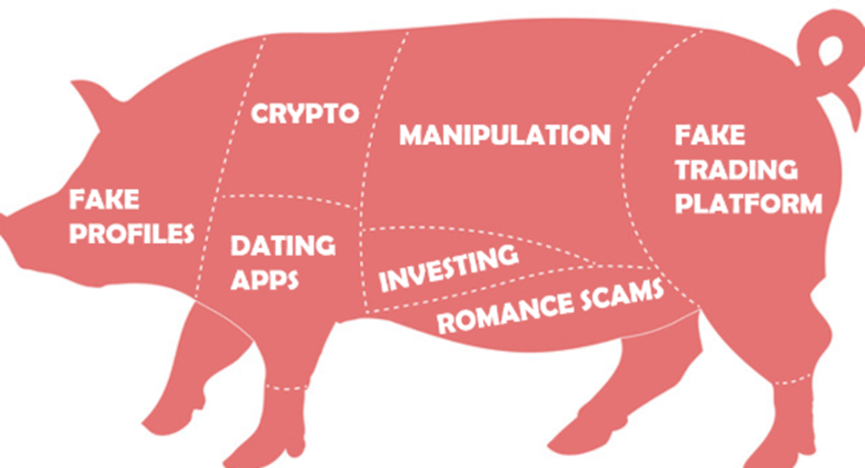
‘Pig-butchering’ activities carried out online by the cyber slaves.
Thailand has made some progress in fighting the slavery, through Interpol and international bodies, but Cambodia has been less vigilant. The traffickers are finding it much harder to operate their cyberscam centers within Thailand, but easier in Cambodia. Unsuspecting victims arriving in Thailand are then kidnapped and trafficked to centers along the Thai-Cambodia border. There must be some high-level Thai collusion in this trafficking. Someone is facilitating the transfer of thousands and thousands of these slaves into Cambodian border towns.
Here is what East Asia Forum says:
…when the job-seekers reach Bangkok, the preferred entry point for mainland Southeast Asia, they are whisked off by bus, taken across land borders and dumped into fortified compounds with armed guards. They have been trafficked. Their passports are confiscated…
A senior Thai police officer spoke of corruption and resistance by officials in Cambodia adversely affecting a joint operation to release some of the suspected 3000 Thai cyber slaves in the country.
The 3000 Thai cyber slaves are only a fraction of the estimated 100,000 slaves from many countries. Most of them pass through Bangkok.
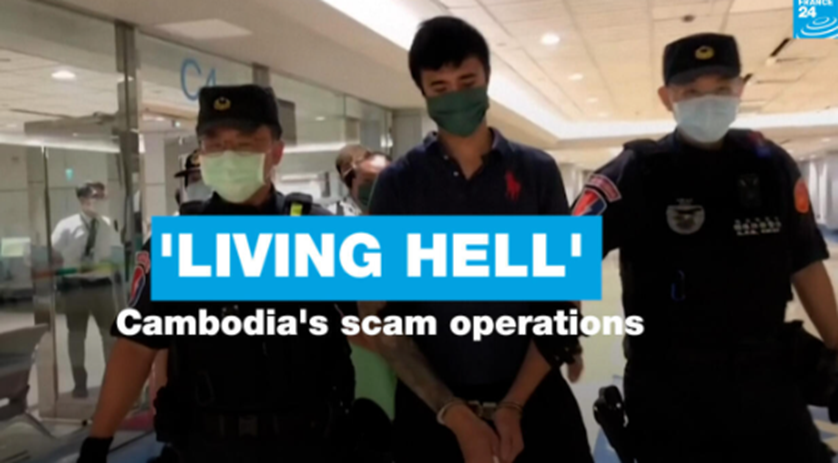
Neither government is willing even to admit that the cyberslave trafficking exists; that would implicate high government officials on both sides. The border dispute, therefore, is a convenient smokescreen to hide what is really going on.
It appears that the opposition Pheu Thai Party is demanding that the ruling party tighten up on this trafficking to Cambodia. The government passed a new cybersecurity law in early June, which has drawn harsh criticism for being too vague and ambiguous, and not directly attacking the cyber slavery. That new law may have been the trigger for the renewed hostilities.
Thai military attacks on various border points (not just the disputed temples) aim to disrupt this trafficking, partially by attacking the Cambodian border centers of the cyberscams.
My guess is, then, that the ruling Peace Party has agreed to tighten up the pressure on the Cambodian border cyberscam operations in exchange for the War Party’s acceptance of a cease-fire by the Thai military with Cambodia.
At the same time, the Cambodian government must have agreed, at least in principle, to tighten the screws on the cyber slavery in Cambodia. This may be difficult, owing to the huge sums of money and high-ranking officials involved. However, if Cambodia does not comply, there may be renewed fighting with Thailand.
Note that this cease-fire is only that — a cease-fire and not a treaty. It does not address or even mention the resolution of conflicting issues, whatever they may be. The war could therefore flare up at any moment. Talks will remain secret, but my guess is that the border issue will not be touched (or perhaps pretend to be touched), while the cyber slavery issue will be at the center of secret discussions.
My prognosis is that such enormous cyber slavery is not sustainable, as it reaches international radar screens and the world demands that it be stopped. As the extent of the corruption comes to light, both the Cambodian and the Thai governments could be extremely embarrassed and might eventually fall. They will fight tooth and nail to prevent this information from being released. For this reason, the border dispute smokescreen is unlikely to go away any time soon.