Last week I wrote about the danger of Stablecoin, a variety of cryptocurrency that guarantees a base return of $1 for every dollar invested. I pointed out that they re-invest your dollars in high-risk assets which can make enormous profits for the issuer, but are protected by the Genius Act’s guarantee of a bailout in case they fail.
This scenario is taking place with the largest Stablecoin issuer: Tether (based in El Salvador, if that doesn’t already tell you something).
An article by Kim Jun-Hoong in Korea’s Chosunilbo put the details on Stablecoin’s gamble by stating that
S&P Global Ratings downgraded Tether’s stability rating from “constrained” to “weak,” the lowest of the agency’s five-tier scale for crypto assets.
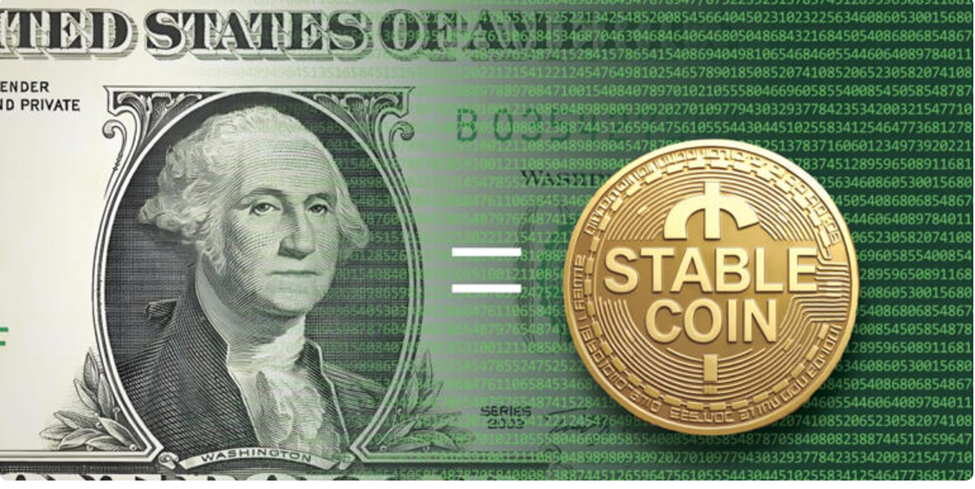
Chosunilbo’s graphic describing the Stablecoin’s promised peg to the US dollar.
In fact, 5.5% of Tether’s collateral is invested in Bitcoin, which is quite volatile and has dropped a lot in recent weeks. If you think you are investing in Stablecoin for safety, you are partially investing in Bitcoin or other unstable cryptocurrencies. Chosunilbo warned that if Bitcoin’s value drops alongside other high-risk assets, Tether’s collateral capacity could rapidly deteriorate.
In general, 24% of Tether’s collateral consists of high-risk assets such as corporate bonds, other cryptocurrencies, and gold. That could be a recipe for disaster — your Tether coin would no longer be worth one dollar.
Are other Stablecoin issuers following the same risky investments of their collateral? I think we can surmise that they are, and that a drop in those risky assets could doom the issuers, forcing the US Government to bail them out, to the tune of exorbitant sums that the government cannot provide.
That’s exactly what happened in the Savings and Loan crisis in the 1980s, costing taxpayers some 132 billion dollars.