
“Pig-butchering” is cruel cyber-slavery.
Cyberslavery, or “pig-butchering”, as it is known colloquially, has become really big business in Cambodia, although most Cambodians are unaware of its existence or influence.
The criminal industry kidnaps and forces into slavery as many as 100,000-200,000 individuals from various countries. According to Business & Human Rights Resource Center,
“scamming has become an enormously profitable domestic industry in Cambodia, with formal estimates of the scamming industry bringing in between $12.5 billion to $19 billion per year, equivalent to as much as 60% of the country’s formal gross domestic profit.“
Let’s repeat that: 60% of the country’s GDP.
Briefly, here’s how pig-butchering works: Nationals from many countries are lured to Cambodia by ads, promising high wages for work in casinos. When the applicants arrive in Cambodia, they are bundled off into slave labor centers, where they are forced to attract foreigners, either through romantic relationships or through financial scams, to part with their money. The slaves are threatened with torture and harsh treatment. They describe their treatment as “living hell.”
Recently, this Cambodian corruption has drawn international attention, especially after a Korean was found tortured to death, and another was found in a coma. The Korean publication Chosunilbo has been publishing article after article exposing this fraud, and the Korean government has announced an outright ban on Korean tourists visiting certain areas of Cambodia (Bokor, Poipet), and strong recommendations to avoid travel in Cambodia in general.
Chosunilbo has been explicit in naming names and organizations, and even includes photos of locations where cyberslavery is alleged to exist.
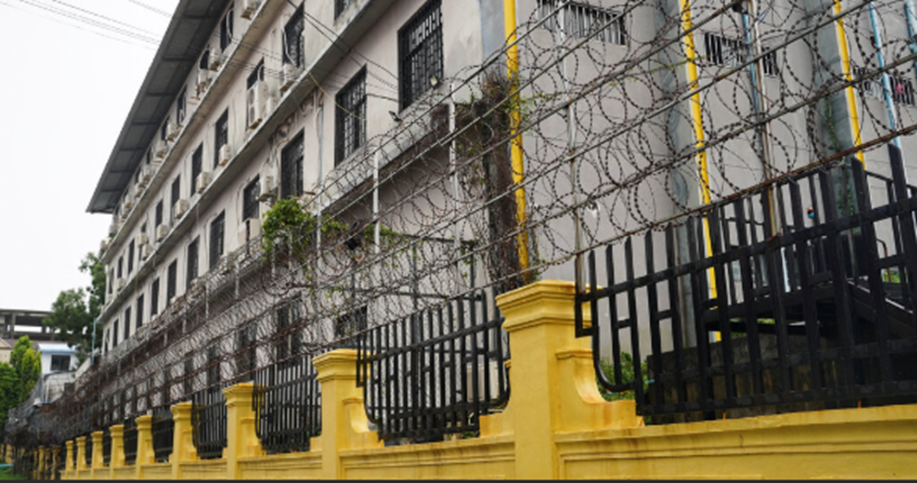
The United States has joined the chorus. They have just indicted Chen Zhi, head of the Prince Group (including Prince Bank) and seized $15 billion in assets. Let’s repeat that: $15 billion. The following is a photo of a cyberslavery center published in the New York Times. Note the barbed wire and barred windows.
The United States is also sanctioning the Huione Group for ‘malicious cyber actors’. The group is alleged to have laundered some $4 billion in illegal profits.
Now if all these names, organizations, and locations are well-known to the international press, how can they continue to operate with impunity within Cambodia, in plain sight? I guess I don’t have to spell it out.
I feel that, with the increased international pressure, and bans on tourism and other commerce, the shit is about to hit the fan. In what form, it is hard to predict. Here are some possibilities:
In history, whenever a lucrative form of crime (think, Prohibition) gets very large, the various kingpins begin to fight among themselves in turf wars. This could well happen in Cambodia, and as the Cambodian proverb goes, “When elephants fight, ants get trampled.”
Even worse, suppose syndicate X is supported by government minister A, and syndicate Y is supported by minister B. We then have a civil war between government factions.
Another scenario is that foreign governments will apply sanctions against Cambodia, in an effort to force the government to act against the criminals. In other countries, as well as in recent Cambodian history, this results in token raids and arrests, made highly visible on international TV, but in fact not much is done.
Still, if more slaves from various countries are found dead of torture, the outrage might be so tumultuous that harsh sanctions may be applied to Cambodia, thereby forcing the government to act more forcefully.
With a significant portion of Cambodia’s GDP coming from pig butchering, the trickle-down effects will permeate every aspect of Cambodian society. For one thing, much of this illegal money has to be laundered, which is done through real estate fraud, or bank fraud. Every time you deal with a bank, you should be aware that your money may be somehow connected to the cyberscam industry. Secondly, the perpetrators of these scams have lots of money to spend on luxury items. This may drive up the price of property, houses, cars, etc.
On the other hand, many of the cyberslavery centers are hidden, out of the eyes of ordinary Cambodians. Remote border crossings like Thmar Da – in the middle of nowhere — now have slave centers. Also, the centers are attached to, or disguised as, gambling casinos, so they look legitimate. Cambodians themselves are not enslaved, and the owners are mostly Chinese, so Cambodians do not appear to be affected. The trouble is, as stated earlier, Cambodians are greatly affected indirectly without realizing it. The government-controlled Cambodian press is not likely to inform them.