I just had the following experience: lying in bed, I thought of a cold beer I had in the fridge, and also that I had some muesli and milk. I thought, “Wow! A cold beer would taste mighty good about now.” But then I thought, “The muesli and milk would be a lot better for my health.” I finally decided, “The beer can wait for another day, but the milk might go bad if I don’t drink it.”

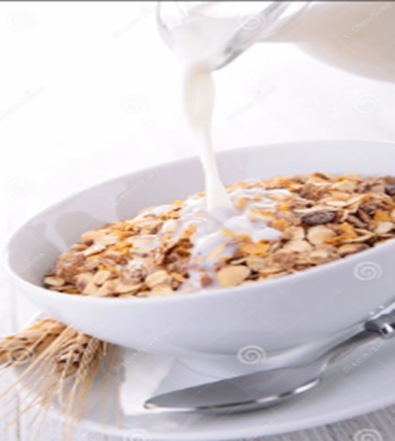
Which would you choose, a cold beer or muesli and milk?
This mental debate reminded me of Freud’s model of the mind — id-superego-ego. Wanting a cold beer represents the id of raw desire; the health benefits of muesli represent the morality of the superego, and the rational choice of the muesli represents the adjudication by the ego.
The id-superego-ego model can be quite useful in describing our thoughts. Many decisions are a struggle between a physical desire and a moral principle, adjudicated by some rational decision. Two separate parts of the brain are struggling, and the decision is made by a third part in order to balance or satisfy the other two.
I remember watching cartoons in my youth, where a character had a devil whispering in one ear, “Go ahead and do it; no one will find out,” while an angel whispers in the other ear, “You shouldn’t do that; it’s not right.” That’s the id and the superego speaking, while the character has to decide which ear to listen to, so that the decision represents the ego.
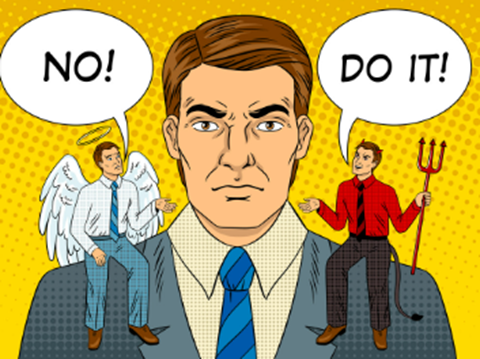
I’m sure you have seen images like this.
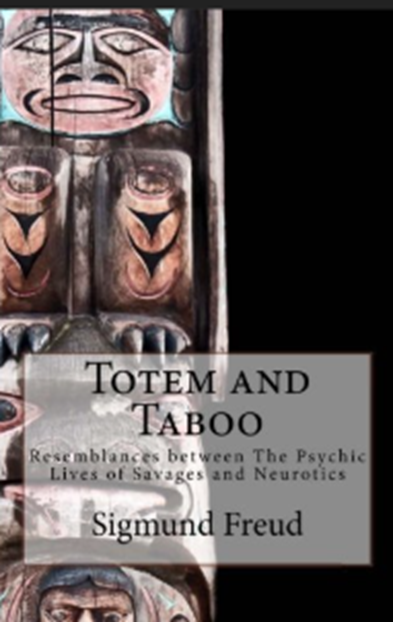
Freud is out of fashion these days, but I think he should be listened to more attentively. Equally out of fashion is another major work of Freud’s: Totem and Taboo. This work has been heavily criticized by sociologists, but it is worth delving into because of its originality of thought. Read it with a grain of salt, but be prepared for stimulating insights worth examining.
Anyway, the next time you have a decision to make, it might be useful to examine which side represents the id and which side represents the superego. Be aware of which part of your brain wins out.