ACADEMIC CONFERENCES AND GIRLY BARS

I recently attended an academic conference on English teaching in Phnom Penh.

It was the stereotype of academic conferences:  plenary sessions by imported invited experts, parallel session by local presenters, panel discussions, etc. Participants know exactly what to expect. I’m not knocking it – there were some interesting and thought-provoking sessions, and I came away full of new ideas.

Later that night, my wife and I went to meet my old friend Stu who sings and plays the guitar down in the Girly-Bar district of town. Rows of sexily-clad girlS sitting out front on the street, while inside the bars, white-haired and white-skinned geezers sat in the low light with their floozies, drinking and listening to the live music. You can be sure that they were not discussing sustainable educational development.

Typical girly-bar scene

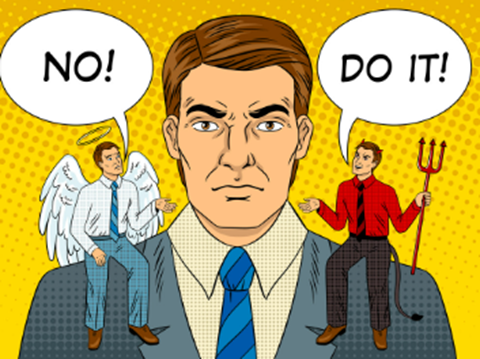
Both the conference and the girly-bar scene followed rather stereotyped rules in their formats, but wow! Were they different! It boggles my mind that the human psyche can embrace such disparate scenes. In fact, to say that you comprehend the girly-bar scene is quite a different kind of ‘comprehension’ than you feel from the conference. They can write the ‘Proceedings’ of a conference, and you will have an general understanding of what it was about. However, you could not read a description of the girly-bar scene and ‘understand’ what it’s about in any real sense of the term.

The girly-bar scene must be experienced first-hand, because it is a holistic experience of sights, sounds, smells, and general atmosphere. In other words, you experience it with your right brain, whereas the conference is mostly a left-brain phenomenon: rational analysis, evaluation of arguments, sequential programming, Venn diagrams, and new ideas.

The two types of understanding are so radically different, it makes me wonder whether a sociological analysis of the girly-bar scene is even possible. An academic paper or study may analyze aspects of the scene, but it will fall far short of conveying the ‘meaning’ of the scene, whatever that means.

For me, my weekend was eye-opening, in that I could witness myself engulfed in two completely different experiences. My brain was operating at two radically different levels, as though I were a split personality. It is to the credit of humankind that such variety of experience can be appreciated, just as the composer Johannes Brahms could play the honky-tonk piano in the 1850’s German equivalent of girly bars, and then go home to write ethereal symphonies and sonatas on a completely different level.

I DON’T UNDERSTAND CRYPTO. I FEAR IT.

I do not fully understand the whole cryptocurrency phenomenon. And what I do not understand, I tend to fear. As a result, I have not jumped into the crypto market. My wife, on the other hand, has read the glowing descriptions of crypto benefits, and has taken the plunge.

I think that my wife is typical of millions of people around the world who are jumping into the crypto market without fully understanding it.  I went looking for articles explaining crypto in more depth, and found an excellent piece by David Frum in today’s Atlantic: “How Crypto Could Trigger the Next Financial Crisis.”

Now most people understand that crypto is volatile, but that Stablecoin has been invented to erase some of that volatility. Another danger of crypto is that it is unregulated. We all know the frustration of dealing with the arcane regulations of banks, especially when dealing with currency exchange or foreign transfers. All that is avoided with crypto.

However, as in so many areas, lack of regulation leads to unscrupulous players taking advantage of the system. In the case of crypto, it is the money launderers who are having a field day, since they can transfer money around the world anonymously.

A big advantage of Stablecoin, especially in the US, is that the issuers’ assets are insured by the US Government. They can’t lose! But what that means is that when you deposit your money with a crypto issuer, they will invest your money, in order to make a profit. There is no ceiling on the risk involved in their investments, and the issuers are safe, because if their risky investment goes south, they will be reimbursed.

This situation reminds me exactly of the Savings-and-Loan crisis a few years back. Deposits in S&Ls were insured by the US Government, so the S&Ls made huge risky investments with their deposits. If they succeeded, they would make billions in profits, but if they failed – no problem – the government would bail them out. That’s precisely what happened, but when billions and billions of losses were incurred, the government’s Resolution Trust Fund couldn’t afford to pay off all the S&Ls. The S&Ls went bust, and local mom&pop investors lost their life savings.

That could happen with Stablecoin. If billions, even trillions of crypto dollars are invested in risky ways, the issuers, along with many banks, could go bankrupt.

Another thing that frightens me is that the regulation of financial instruments is done by politicians, including Donald Trump, who keeps taking actions to deregulate crypto. The fact that he is pushing crypto so strongly makes me suspect that he has some fishy way of making money for himself.

Would you trust this cryptocurrency?

Even without Trump, politicians around the world are not only corrupt, they are quite ignorant about many intricate financial matters. Crypto issuers and their lobbyists could easily sell a package of ‘regulations’ to the Dunning-Kruger politicians. I would not trust those regulations, because the issuers have already figured out ways to scam them.

In summary, I fear – no, I’m sure – that crypto will sooner or later crash bigtime, just like the Savings and Loan scandal and the Subprime Mortgage scandal. The process is always the same. Stupid politicians set up a system that looks good to voters and investors on the surface, while the smart boys figure out ways to game the system, rake off their billions, and bring the entire financial system crashing down, all without ever paying any penalty.

AM I A TEAM PLAYER?

Another birthday passes. (Actually, as I write, it’s still my birthday in the US, as the US is 12 hours behind us.) Time to reminisce on my life and evaluate where I went right or wrong. One tends to ask oneself, “What was my greatest achievement?”

My thoughts turned to being a ‘team player’, and it occurred to me that there are two diametrically opposed definitions of the term. The first is always to work towards the objectives of the team, in a win-win attitude. The other is blind obedience to an egotistical leader. I think that my greatest achievement has been to be a team player in the first sense and to avoid the second.

Job interviews and advertisements often refer to the term in the second sense. I have worked for projects and institutions that emphasized blind obedience, which they call ‘team playing’. They have tended to be high profile projects with career-climbing leaders whose aim is self-agrandizement rather than doing good. The team members are expected to massage the ego and enhance the career of the leader above all else.

I admit to playing the CV game, and I landed prestigious consultancies with World Bank, Asia Development Bank, UNDP, and USAID. They never achieved much, other than to enhance the career of the team leader and play the politics of the sponsor. I was often berated, or even fired, because I tended to suggest win-win solutions to enhance the project or institution, which is not what is required. On the other hand, my lower profile work with some institutions proved very satisfactory. I want to single out a couple:

  1. The University of East Asia, Macau, was set up by the late George Hines, whose leadership was aimed at promoting the university, not himself. He gathered around him a real team of dedicated win-win personalities, with whom I am still in contact today. And the university was very successful. It was eventually bought out by the Macau government and is now the University of Macau.
  2. Goroka Teachers’ College in Papua New Guinea took me on as a United Nations Volunteer. Under the leadership of Dr. Mark Solon and Dr. James Quarshie, we transformed the teachers’ college into Goroka University, often against the opposition of the powers-that-be down in Port Moresby. We all worked towards the common goal, so that the mountain university is still thriving today.

I ended up here in Cambodia, as part of a USAID project to set up the National University of Management in Phnom Penh. The project was full of interpersonal strife, with ‘team leaders’ pushing their own agenda with little regard for Cambodia. However, we lower-ranked team members persevered, and our efforts eventually led to the number one and most highly respected business university in Cambodia today. Several of those good team players are still in Cambodia today.

I moved to Battambang, in northern Cambodia, and helped set up a new private university. We had high ideals, but one founder bought out the shares of the others, and turned the university into a fake university, with phony programs and lies to promote a glitzy, international image. I persevered, especially after the owner named me ‘President’ of the university. Alas, that, too, was all phony imagery – I was the white-skinned academic with no actual authority.  I watched as the owner ran the quality of the university into the ground, while I persevered – or perseverated — in the hope that I could salvage something. I often used the following analogy:

Imagine a huge boulder rolling down the mountain towards a village. If I stand in front of the boulder, it will crush me and continue on to destroy the village. But if I stand to the side and give the boulder a nudge, it may miss the village.

Well, I saw my university about to be destroyed and I tried to be the ‘adult in the room’, in an attempt to save the university. My friends often criticized me for continuing to play along with the narcissistic owner, but I hoped, perhaps irrationally, that I might save the university I had founded. Finally, the owner started a new program that was so outrageous, impossible, and phony, that I could no longer attach my name as President to such fraud. I consider it to my credit that I got out, although I should have gotten out long before that.

Maybe my ego succumbed to the prestige of the title of University President, although I knew all along that it was all fake, so I played along with the game. Therefore, I feel no pride in being a ‘University President’, and I’m even ashamed that I played along with this fraudulent game, but am pleased that I eventually got out.

In summary, I consider that my life’s greatest accomplishment has been always to be a team player, in my own win-win sense of the word, and have never fallen prey to the suck-up, brown-nosing sense of the term.

THE THAI-CAMBODIA BORDER – WHAT’S GOING ON?

Thailand announced on Monday (Nov 10) it was suspending the implementation of a peace agreement with neighboring Cambodia after a landmine blast injured two Thai soldiers near the border.

The Peace Agreement had been widely praised, not least because of the involvement of U.S. President Donald Trump. (In fact, Trump had nothing to do with the Agreement.) The five main points were the following:

  1.  Commitment to peace.
  2. Military de-escalation
  3. Release of 18 soldiers
  4. Normal diplomatic relations
  5. Refrain from misinformation

Numbers 1, 4, and 5 are pretty much empty words.

Number 2 has actually been complied with. Reliable photos have been released, showing columns of armored vehicles being pulled back from the border.

Number 3 is still a mystery to me. Yesterday morning was scheduled to be the release date of the 18 hostages. Ambulances were brought to a pre-arranged border crossing, in anticipation of bringing the hostages into Cambodia. If it had happened, there would have been tremendous hoopla in the media. The absence of any news seems to indicate that the turnover never happened. Why not?

The Agreement is important for what it does NOT address: the underlying core issue of the border dispute. That dispute is not even mentioned in the agreement. This fact suggests that the Agreement was at best a patch job designed to shut the major parties up temporarily. At its most cynical, it was a staged photo-op for Trump to show off to the world that he had stopped another war.

Standoff between Thai soldiers and Khmer villages.

The usual modus operandi is for Thai soldiers to encroach upon Khmer-held land, and put up coils of barbed wire as a way of ‘claiming’ the land.

Thai internal politics is admittedly complex. To oversimplify the situation, let’s think of it as a Nice Guy Faction (siding with the Shinawatra family) versus a Tough Guy Faction. One of the triggers to the recent conflict was a conciliatory telephone call from Prime Minister Paetongtarn Shinawatra to Hun Sen, in which she called Hun Sen ‘uncle’, made some guarantees about the border dispute, and criticized a Thai general. This so infuriated the Tough Guys that the Prime Minister was forced to step down.

The following is a timeline of the past couple of days. It is rather mysterious:

Monday – Thai soldiers step on landmines

A word about the landmines: This border area was once one of the most heavily and densely mined places in the world. Much of the land around O Bey Chuan village was demined, and IDPs (Internally Displaced Persons) were resettled there.

By sheer coincidence, several years ago I was sent to O Bey Chuan on a research consultancy to determine the profiles (especially skills) of the IDPs, along with the types of crops that could be grown and marketed from demined land in that area.

The fact that much of the land around O Bey Chuan had been demined does not prove that Thai soldiers stepped on newly-planted mines, as they claim. Indeed, there were border areas that had not been demined, so the Thai soldiers might have stepped on 30-year-old mines. However, no Khmers have been injured by mines there; they knew that the area was dangerous and didn’t go there. If there had been recently laid mines, that fact would be known, as the Thais and the international observers would have seen the mines being laid. I conclude that that the Thai generals knew that the area was mined.

Monday – Almost immediately after mine incident, the Thai Prime Minister announces cessation of the Peace Agreement. The timing here indicates to me that the mine incident, followed immediately by the announcement, was planned by the Tough Guy Faction.

Wednesday Morning – The scheduled release of the 18 hostages. Ambulances were brought to the handover point. This would have been a concession to the Nice Guy Faction, but apparently the Tough Guys blocked it. As far as the media have been telling us, no one was released.

Wednesday afternoon 4 p.m. – Thai troops open fire on unarmed villagers. This was clearly a victory for the Tough Guys. The Thai press reports that only rubber or plastic bullets were fired, and tear gas was used to disperse the crowd, but the Cambodian authorities report at least 29 people injured, and one woman killed. A video on Facebook by SreyLeak Loeung clearly shows the confrontation, where the Thai soldiers were firing point-blank at the villagers. If the bullets had been real, there would have been great loss of life.

It would seem, therefore, that the Nice Guys Faction, while gaining some leverage with the Peace Agreement, have lost out to the Tough Guys Faction.

In all of this, it seems that the whole dispute, war, and peace agreement had little to do with Cambodia, but everything to do with internal Thai politics. That will continue to be the case. If the Tough Guys continue to hold sway, we can expect continued skirmishes initiated by Thailand, just to show the Thai people what tough guys they are. If the Thai populace grows tired of these little skirmishes, the Tough Guys may resort to more major incursions and warfare.  Let’s hope not.

Sorry, Trump, you can no longer claim to have stopped 8 wars. (But you probably will continue that claim anyway.)

TRUMP’S T.I.A.?

I’m not hearing the expression TIA on TV, probably because most people have never heard of it. My uneducated opinion is that TIA could be Trump’s problem.

TIA stands for transient ischemic attack. It is often called a ‘mini-stroke’, as it displays stroke-like symptoms for a temporary (transient) period. An ischemic stroke is a blockage of blood vessels in the brain, as is a TIA, only the TIA is only temporary.

Trump’s drooping face, a typical stroke symptom, is now familiar to most people, but it was only temporary. His face is now more or less back to normal.

The bruises on his right hand were originally described, ridiculously, as caused by too much hand-shaking. The administration then retracted its obvious lie, and said it was a result of a lot of aspirin. Aspirin is a blood-thinner, so aspirin, or some other thinner, could be being administered to Trump as a prevention of stroke.

Bruised hand. From shaking hands? Or administration of a blood thinner?

Why did they call for a special, semi-secret physical check-up and try to disguise it as ‘routine’? Perhaps the face-droop tipped them off. They gave him a cognitive test to see whether his brain was functioning. Maybe they suspected that a TIA could have caused a malfunction. By the way, the most common cognitive test – probably the one given to Trump – is the MoCA. The MoCA is not just a general test of cognitive function; it tests quite specific functions, such as memory, attention, language, and executive skills. Thus, Trump might have scored 100% on most sections of the test, but failed one or two specific functions.

MoCA questions are considered easy for normal brains, like drawing a clock. Trump said that some questions were difficult. They shouldn’t have been. Maybe those ‘difficult’ questions tipped the doctors off to an area of possible malfunction.

The impairment of one function, say, memory, might prompt the medical team to suspect brain impairment in the memory sections of the brain. They could then go in with an MRI to see whether there was any blockage there. It might even pick up a brain tumor, or a clot. This could be the reason for the extraordinary call for an MRI, which is never part of a ‘routine’ physical examination, as Trump has claimed.

Since a TIA is only temporary, it is possible that the MRI didn’t pick up any ischemia, and so Trump could claim that it was ‘perfect’. (Or maybe they did find something, but Trump just lied about it.) Maybe he has actually had a real stroke.

Assuming that TIA is the problem, or at least that Trump is at risk of a stroke, what is the prognosis? The Mayo Clinic estimates that 1 in 3 people who experience a TIA will eventually have a stroke. I think that stroke prevention will be the doctors’ number one concern for Trump.

There are, of course, many alternative possible explanations for Trump’s physical and mental problems. My TIA explanation ties together many of the threads: 

  • Bruised hand (aspirin?)
  • Need for cognitive test
  • Difficulty of cognitive test

  • Call for secret MRI
  • Droopy face (temporary)

The more the White House tries to hide Trump’s condition with ridiculous lies, such as shaking hands too much, the less anyone will believe anything they say, and the more people (like me) will speculate as to what serious condition is being hidden.

MAGA and the Psychology of Spite

You don’t hear the word ‘spite’ much in the media these days. But I think it might be the most important descriptor of the mood of the MAGA cultists.

I’m taking a lot of this material from Neurolink.com. Spiteful Behavior: Causes, Consequences, and Coping Strategies

 It’s a unique beast that sets itself apart from other negative emotions like anger or jealousy. While anger might lead to an outburst in the heat of the moment, spite is often more calculated and persistent. And unlike jealousy, which stems from wanting what others have, spite is fueled by a desire to see others suffer or fail.

The MAGA cultists want to see the elite and ‘woke’ elements of society suffer. They want Trump to attack the elite Ivy League universities, while not caring about East Podunk State College. They want to take down medical research; those arrogant scientists should not be allowed to find a cure for cancer. And of course, there’s ICE. MAGA gets a thrill of vengeance from seeing hard-working immigrants dragged from their beds, beaten, detained without due process, and secretly shipped off to some foreign hellhole, because it somehow ‘owns the libs’.

At its core, spite often stems from a deep-seated sense of injustice or a perceived slight. It’s the brain’s way of trying to even the score, even if that means cutting off its nose to spite its face (pun absolutely intended). [In the semi-desert Sahel in Africa, they have an equivalent expression: “Shit in the shade”. Think about that.]

Low self-esteem and insecurity can be major drivers of spiteful behavior. When someone feels inadequate or threatened, they might lash out spitefully as a way to boost their own sense of power or worth. It’s like trying to build yourself up by tearing others down –

The desire for control and power is another key factor. Some people use spite as a way to manipulate others or assert dominance. 

The above sounds a lot like the typical MAGA voter.

Here’s a twist that might surprise you: the person who suffers most from spiteful behavior is often the spiteful individual themselves. It’s a classic case of the punishment not fitting the crime – or rather, the punisher becoming the punished. Carrying around all that negativity takes a serious toll on mental and emotional well-being. It’s like drinking poison and expecting the other person to get sick.

Let’s apply this to MAGA behavior. “Smug Hillary looked down on us and called us ‘deplorables’. We’ll show her, and vote against her and her fellow libtards no matter what Trump may do to us.” You can say they got what they voted for, but it was more what they voted against, regardless of the consequences, of which they were fully aware.

I read a great book some years ago, called What’s the Matter with Kansas?, by Thomas Frank.  He examines the phenomenon of people voting against their own interests. They vote to spite some elite group, at their own expense.

Frank posits that the political discourse has shifted from addressing economic inequality, to focusing on cultural issues such as abortion and gay marriage. This shift has allowed conservative leaders to redirect public anger away from economic hardships and towards cultural battles, effectively consolidating their power . [Wikipedia]

Today we see MAGA supporting the ‘Big, Beautiful Bill’ which will deprive them of their health benefits, but that’s acceptable to them, as long as the GOP doesn’t allow a handful of transgenders to play women’s sports. Trump just refused to release money to provide food assistance to some 42 million poor people, but MAGA says that’s OK, as long as Trump continues to build concentration camps for those raping and murdering immigrants.

Almost every day I hear pundits ask, “How can MAGA vote against their own interests?” When asking the question, keep in mind the spite angle, as voting against your own interests is secondary to spiting the elite and the ‘woke’.

HOW WILL CAMBODIA HANDLE THE CYBERSLAVERY SCANDAL?

Recent events have beamed the spotlight on Cambodia’s massive ‘pig-butchering’ scams. Cambodia is in the international news, especially in Korea (a Korean student was tortured to death) and the United States (the leader of Prince Group had 15 billion dollars in illegal money confiscated).

Prince Bank is undergoing a huge bank run, as investors try to withdraw their money.

Anyone reading the news about this scandal will raise some questions and draw logical conclusions:

1. Chen Zhi, the indicted kingpin of the Prince Group, reportedly owned 10 crime centers, raking in, as he boasted, some $30 million dollars per day. The United Nations and other agencies have identified some 53 crime centers. Who owns the other 43, and what is being done about them?

    2. On such a huge scale, amounting to billions and billions of illegal dollars (an estimated 60% of Cambodia’s GDP), as well as some 100-120,000 slaves working under threat of torture and electrocution, there must be massive corruption in the Cambodian government, as high-ranking officials are looking the other way and protecting the cyber criminals.

    3. Cambodia has a surfeit of banks, casinos, and real estate companies. How is an investor to know which ones are legitimate, and which ones are conduits for laundering the billions of illegal dollars from the cyberslave centers?

    Any investor who pursues these questions is bound to swear never to invest a cent in Cambodia. Even invested money already in Cambodia is already being pulled out. Cambodian investment is about to take a huge hit. Tourism is affected, as Korea (and probably soon to be others) is warning tourists of the dangers of Cambodia, and actually banning Koreans from visiting cities with known cybercrime centers.

    The Cambodian government, faced with this damaging reputation, can turn in either of two directions. On one hand, it can address the issue head-on and clamp down on the corruption. The 53 crime centers, and their kingpins, are well known, as reported and even photographed in the international press. The Government could go after the criminals and shut down the crime centers.

    On the other hand, there are too many influential and powerful people feeding at the trough, raking off billions of dollars. They may not be willing to get off the gravy train. If they insist on maintaining the status quo, the problem of corruption and pig-butchering will persist. Investors will stay away from Cambodia and the economy will suffer.

    Which option will Cambodia choose? It may depend on the severity of sanctions applied by foreign countries, to finally force the government into action.

    COULD PIG-BUTCHERING HAPPEN IN AMERICA?

    I’ve been watching events unfold in Trump’s America – rampant corruption, cruelty, disregard for the rule of law, etc. However, I live in Cambodia, reputed for years to be one of the most corrupt nations on the planet. In recent weeks, the ‘pig-butchering’ scandal has emerged. (look it up for details, or read my previous blog), with hundreds of thousands of ruined lives, kidnapped slaves, trafficking, torture, electrocution, extortion, fraud, billions and billions of illegal dollars scammed and laundered, etc. This is one of the most gruesome violations of human rights this century.

    So when I look at Trump’s corruption, my first thought is that surely Cambodia is much worse. Pig-butchering on such a massive scale could never happen in America.

    Or could it?

    How might a huge scam like pig-butchering ever happen in the USA? Here are some tips from Cambodia that could help Trump pull it off.

    1. Naturally, the highest public officials must be bribed (or threatened) to turn a blind eye to torture and extortion. Just a few bribes to Trump and his rich friends, and you’re home free.
    2. Disable the financial regulation and justice systems so that criminals will not be investigated or caught. Or if somehow caught, then pardoned. Looks like this has happened in the USA already. The politician who accepted a $50,000 bribe on camera has had charges dropped by the Department of Justice.
    3. Build your cyberslave centers in remote areas, or else disguise them or attach them to casinos, so that ordinary Americans don’t see anything. I was quite surprised that educated Cambodians had not even heard of the massive pig-butchering scandal, amounting to an estimated 50-60% of the entire country’s GDP.
    4. Kidnap only foreigners into slavery. No Americans would disappear that way. Who cares about a bunch of unknown foreigners? But don’t make the mistake of actually torturing a slave to death. That happened to a Korean in Cambodia, and the international community, especially Korea, has jumped all over the Cambodian government and exposed the corruption.
    5. Intimidate the media into turning a blind eye. Let it be known that any investigation or reporting will be met with a Trump lawsuit for billions of dollars.

    Now that Trump controls the media, the Supreme Court, the Department of Justice, and the financial system, he could actually get away with a huge pig butchering scam. Just wave some money in front of his eyes. The ringleader of just one of the many operations — the Prince Group scam — has had 15 billion dollars in illegal profits confiscated. That guy once bragged that his pig butchering brought in 30 million dollars per day. Could Trump resist that?

    Finally, just for comparison, the US was the center of the Epstein operations, the biggest child-rape, sex-trafficking scandal in history, and Trump and his cronies have — so far – managed to cover it up. If Trump can cover up such a massive scandal, surely he could cover up any pig-butchering operation in the USA.

    CAMBODIAN PIG- BUTCHERING IS A REALLY BIG DEAL

    “Pig-butchering” is cruel cyber-slavery.

    Cyberslavery, or “pig-butchering”, as it is known colloquially, has become really big business in Cambodia, although most Cambodians are unaware of its existence or influence.

    The criminal industry kidnaps and forces into slavery as many as 100,000-200,000 individuals from various countries. According to Business & Human Rights Resource Center,

     “scamming has become an enormously profitable domestic industry in Cambodia, with formal estimates of the scamming industry bringing in between $12.5 billion to $19 billion per year, equivalent to as much as 60% of the country’s formal gross domestic profit.

    Let’s repeat that: 60% of the country’s GDP.

    Briefly, here’s how pig-butchering works: Nationals from many countries are lured to Cambodia by ads, promising high wages for work in casinos. When the applicants arrive in Cambodia, they are bundled off into slave labor centers, where they are forced to attract foreigners, either through romantic relationships or through financial scams, to part with their money. The slaves are threatened with torture and harsh treatment. They describe their treatment as “living hell.”

    Recently, this Cambodian corruption has drawn international attention, especially after a Korean was found tortured to death, and another was found in a coma. The Korean publication Chosunilbo has been publishing article after article exposing this fraud, and the Korean government has announced an outright ban on Korean tourists visiting certain areas of Cambodia (Bokor, Poipet), and strong recommendations to avoid travel in Cambodia in general.

    Chosunilbo has been explicit in naming names and organizations, and even includes photos of locations where cyberslavery is alleged to exist.

    The United States has joined the chorus. They have just indicted Chen Zhi, head of the Prince Group (including Prince Bank) and seized $15 billion in assets. Let’s repeat that: $15 billion. The following is a photo of a cyberslavery center published in the New York Times. Note the barbed wire and barred windows.

    The United States is also sanctioning the Huione Group for ‘malicious cyber actors’.  The group is alleged to have laundered some $4 billion in illegal profits.

    Now if all these names, organizations, and locations are well-known to the international press, how can they continue to operate with impunity within Cambodia, in plain sight? I guess I don’t have to spell it out.

    I feel that, with the increased international pressure, and bans on tourism and other commerce, the shit is about to hit the fan. In what form, it is hard to predict. Here are some possibilities:

    In history, whenever a lucrative form of crime (think, Prohibition) gets very large, the various kingpins begin to fight among themselves in turf wars. This could well happen in Cambodia, and as the Cambodian proverb goes, “When elephants fight, ants get trampled.”

    Even worse, suppose syndicate X is supported by government minister A, and syndicate Y is supported by minister B. We then have a civil war between government factions.

    Another scenario is that foreign governments will apply sanctions against Cambodia, in an effort to force the government to act against the criminals. In other countries, as well as in recent Cambodian history, this results in token raids and arrests, made highly visible on international TV, but in fact not much is done.

    Still, if more slaves from various countries are found dead of torture, the outrage might be so tumultuous that harsh sanctions may be applied to Cambodia, thereby forcing the government to act more forcefully.

    With a significant portion of Cambodia’s GDP coming from pig butchering, the trickle-down effects will permeate every aspect of Cambodian society. For one thing, much of this illegal money has to be laundered, which is done through real estate fraud, or bank fraud. Every time you deal with a bank, you should be aware that your money may be somehow connected to the cyberscam industry. Secondly, the perpetrators of these scams have lots of money to spend on luxury items. This may drive up the price of property, houses, cars, etc.

    On the other hand, many of the cyberslavery centers are hidden, out of the eyes of ordinary Cambodians. Remote border crossings like Thmar Da – in the middle of nowhere — now have slave centers. Also, the centers are attached to, or disguised as, gambling casinos, so they look legitimate. Cambodians themselves are not enslaved, and the owners are mostly Chinese, so Cambodians do not appear to be affected. The trouble is, as stated earlier, Cambodians are greatly affected indirectly without realizing it. The government-controlled Cambodian press is not likely to inform them.

    TRUMP’S AMERICA AND THE KHMER ROUGE

    A lot of media sources are pointing to similarities between Trump’s America and Hitler’s Germany. Here’s a different take: compare Trump’s America to Cambodia’s Pol Pot’s Khmer Rouge auto-genocide.

    Victims of the ‘Killing Fields’. Coming to America?

    Most historians agree that the horrendous Khmer Rouge phenomenon was caused by resentment of rural people towards city folk. Their anger grew so huge that they declared war on the city dwellers. Recall that the KR drove all the inhabitants of Phnom Penh into the countryside, where they were slaughtered mercilessly. About 2 million deaths, at best estimates.

    The cities had been receiving all the foreign aid; education was found in cities only; the government in PP was seen as impossibly corrupt. The rage of the neglected rural population led to the widespread massacre of the elite. The ‘libs’ you might call them. Or maybe ‘woke’.

    Look at recent elections in the US: it’s mostly rural versus urban. Even in solidly red states, the cities vote Democratic. The small villagers in rural US see the elite libs in the cities as taking all the benefits, including education and the spoils of corruption. They are mad as hell, and they elected Donald Trump to give the middle finger to the city elites (even though he is one of them). And by the way, Saloth Sar – alias Pol Pot – also belonged to the elite and studied in Paris.

    The Trumpies therefore love to see cruelty, as a way to vent their own anger. They get a vicarious kick out of seeing masked ICE thugs dragging mothers and children out of apartments in the middle of the night. They love torture in concentration camps with inhumane conditions like Alligator Auschwitz.

    The KR hated education. Anyone who could read, or even anyone wearing eyeglasses, was summarily executed. The US is going down the anti-education, anti-intellectual road. Elite universities are targeted; medical research is curtailed; and incompetent White House appointees are selected with the lowest possible qualifications. Trump is dismantling the Department of Education. His rural backers will love that. Where is this leading?

    Even the slogan MAGA hearkens back to the KR’s vision of re-creating the glories of the ancient Angkorian empire. Pol Pot’s slogan could easily have been “Make Cambodia Great Again.”

    But watch out! Rural anger could get so out of control, there could be civil war between the cities and countryside. Maybe Trump has already started that war with his military takeover of cities. It could get really ugly and nasty. Trump is promoting violence, to the extent that his critics are receiving death threats and some, like Nancy Pelosi’s husband, have actually been attacked. Attackers are either not prosecuted or else pardoned, so they know they can get away with all sorts of violent acts. I can only see this trend as increasing. Rural rage is not rational or logical; strong emotions can lead to unpredictable behavior. Who could have predicted what happened in Cambodia?